Australia's role in the Christchurch attacks, and the work to be done

From across the ditch, the news that the Christchurch terrorist was an Australian was accompanied by a sinking feeling. The way in which our everyday public debate is steeped in concepts of white superiority made it all too predictable that such a horrendous crime should find its origins on our shores.

Australia Wants to Take Government Surveillance to the Next Level

A state’s capacity to spy on its citizens has grown exponentially in recent years as new technology has meant more aspects of our lives can be observed, recorded and analyzed than ever before. At the same time, much to the frustration of intelligence agencies around the world, so has the ability to keep digital information secret, thanks to encryption.

The positives and perils of My Health Record

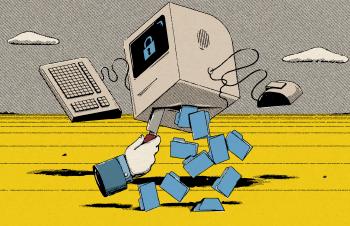
Last week, Singapore's ministry of health admitted information from 1.5 million citizens had been copied in "a deliberate, targeted, and well-planned cyber attack" by hackers who were specifically going after the personal data of the country's prime minister, Lee Hsien Loong. It took authorities a week to detect the breach, which, to be fair, is relatively fast given the average organisation takes more than six months.

Tech has no moral code. It is everyone's job now to fight for one

It has been a tough two years for the technology industry. The 2016 US election was a turning point for what was formerly the face of upbeat, self-actualising capitalism. Today the common view is that a tiny minority has been making money by disrupting things at the expense of the majority. Technology companies are out of control because law-makers have been neglectful, indifferent or – worse – baffled by the prospect of regulation. But in the wake of the Cambridge Analytica/Facebook data-harvesting scandal, there is new interest in the role of ethical considerations in the work of technology companies, and the programmers who build their machinery.

Submission to UN inquiry into the right to privacy in a digital age

On 23 March 2017, the Human Rights Council adopted resolution 34/7 on “The right to privacy in the digital age”. The Office of the High Commissioner for Human Rights then invited input on human rights challenges relating to the right to privacy in the digital age, including on principles, standards and best practices with regard to the promotion and protection of the right to privacy.

Time to cut ties with the digital oligarchs and rewire the web

Facebook’s reckless vanity has made the headlines again, with the revelation that data it held on about 50 million users was exploited commercially without their consent, and that when Facebook found out about this, it did pathetically little. We only know this thanks to the bravery of a whistleblower. This is yet another scandal in a troubled period for the company, with a growing sense that it is all profit, no responsibility. But the current malaise goes wider than Facebook. On the internet more widely, the advertising-supported model has demanded its payout, and as a result our experience of the web is getting worse. Like rats scrambling to get back on a sinking ship, senior former-Facebookers are lining up to express regrets. It all feels too little, too late.